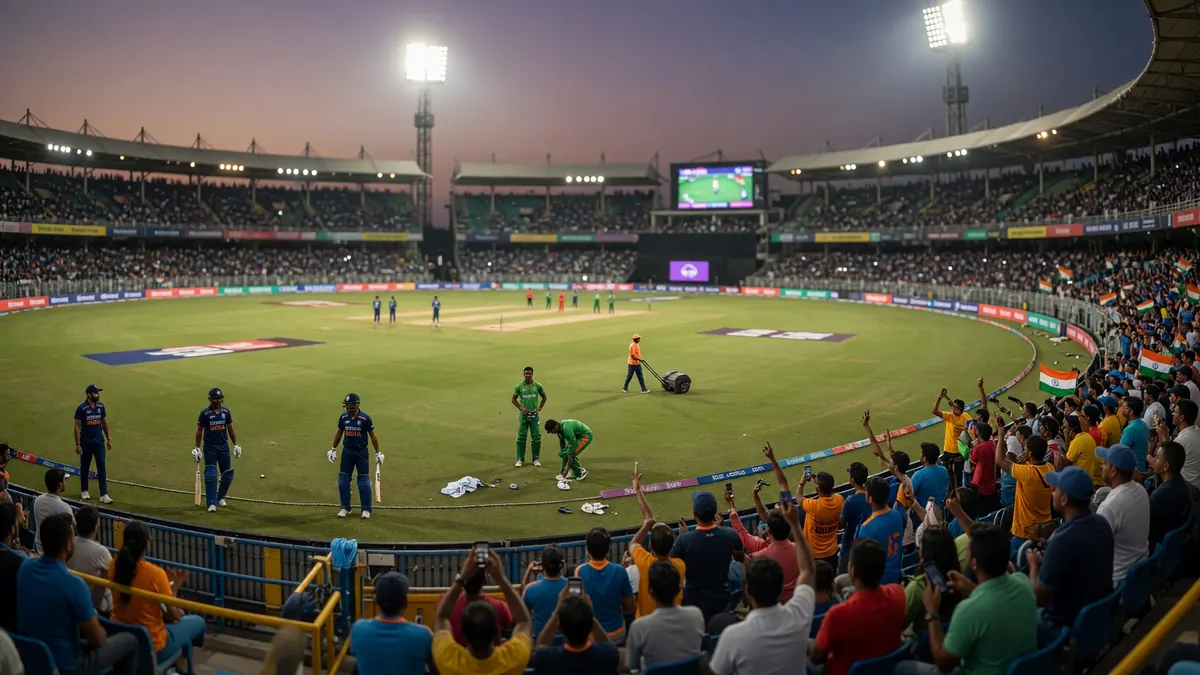
On Saturday, 25 July 2026, India and Zimbabwe met in the second T20 international of a three-match series at Harare Sports Club. India arrived 1-0 up after a seven-wicket win in the opener. Zimbabwe won the toss and chose to field. For Indian viewers, the fixture was listed for live telecast on Unite8 Sports and for live streaming on FanCode. This retrospective locks the kickoff time, broadcast routes, both confirmed XIs and the opener context that framed the afternoon.
· GetMega Live Matches Desk · Retrospective
Bilateral T20 series in Zimbabwe rarely dominate Indian sports conversation for long, yet the second match of a short tour often decides whether a visiting side can close a series early or whether the host keeps the decider alive. On 25 July 2026 that pressure sat with both dressing rooms. India had already taken the first T20I by seven wickets on Thursday. Zimbabwe needed a response at home. India needed a second clean performance to protect the series lead before the third game.
The GetMega desk returns to the fixture as a dated match-day record rather than a live blog. The original NDTV Profit dispatch published that afternoon listed the start time, toss window, venue, broadcast platforms and both playing XIs. Those facts remain the ceiling for this write-up. Nothing here invents a final score, a man-of-the-match award or a series result beyond the 1-0 lead India already held walking into Harare Sports Club.
The second T20I was scheduled for Saturday, 25 July 2026, with the first ball listed at 4:30 p.m. IST. The toss was set for 4:00 p.m. IST, a standard half-hour buffer that gives captains and coaches a final look at the surface before the playing XIs are locked on the broadcast graphic. The venue was Harare Sports Club in Harare, Zimbabwe — a ground with a long record of hosting India touring sides and a square that can reward both clean ball-striking and disciplined seam bowling when the new ball moves.
Zimbabwe won the toss and opted to field. That choice put India into bat first on an afternoon start, with the hosts chasing under lights later if the innings stretched. For a side trailing 0-1, bowling first is a familiar Harare plan: take early wickets, keep the target modest, then use home conditions in the chase. For India, batting first meant the top order had to set a score that protected the series lead without forcing a scramble in the death overs.
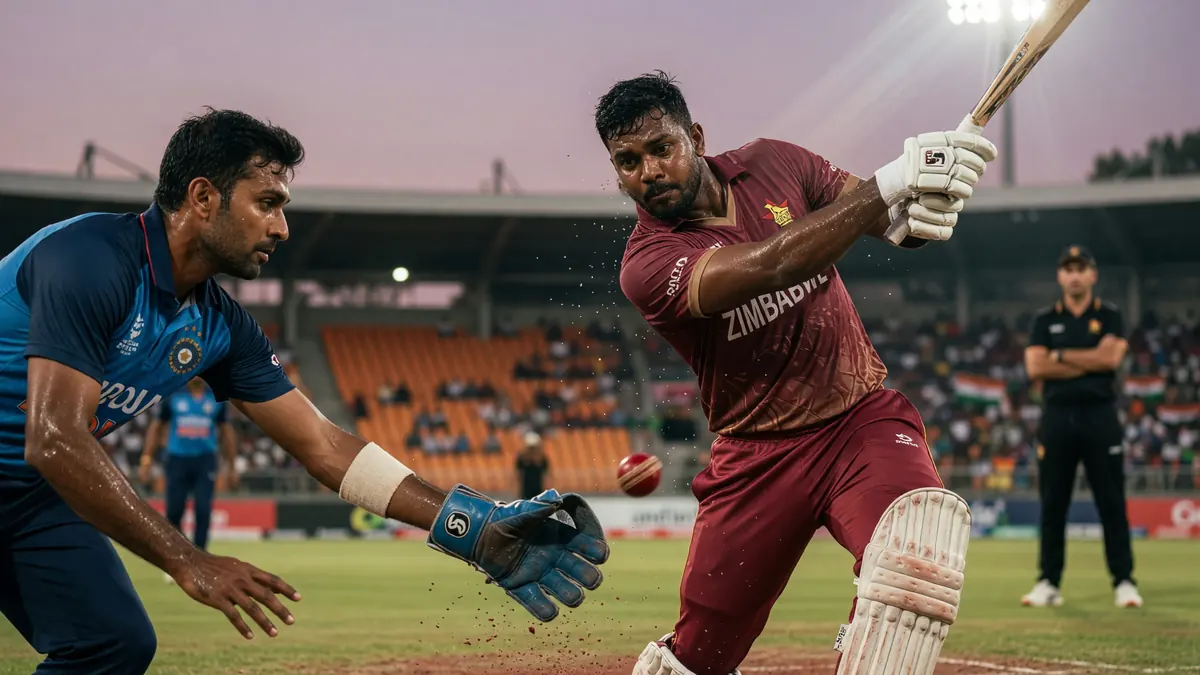
India entered the second T20I leading the three-match series 1-0. The first match, played on Thursday, had been a one-sided chase. Zimbabwe posted 126, and India knocked the target off with more than six overs to spare. The standout batting note from that night was Vaibhav Sooryavanshi, who became the youngest batter to score a men's T20I half-century. The innings fixed his name on the tour narrative before the second fixture even began.
Two other opener details travelled into the second match briefing. Mayank Yadav, back after nearly two years out, took 2 for 18. Shreyas Iyer finished unbeaten on 28 in his first win as India captain. Those three strands — a teenage opener making history, a fast bowler returning from a long layoff, and a new captain collecting an early win — explained why the second T20I was watched as more than a routine bilateral stop. The XI India named on Saturday kept all three names in the frame.
India made a single change for the second T20I. Yash Thakur replaced Ashok Sharma. The rest of the side stayed intact, preserving the balance that had delivered the seven-wicket win two days earlier. The confirmed India XI read:
The batting spine mixed youth and middle-order power. Sooryavanshi and Abhishek Sharma opened. Ishan Kishan kept wicket and occupied the top three. Iyer captained from the middle. Tilak Varma, Rinku Singh and Shivam Dube formed a left-hand-heavy finish that can accelerate once the powerplay is done. The bowling group paired Mayank Yadav's pace with Yash Thakur's arrival, while Ravi Bishnoi and Prince Yadav covered spin and change-up overs. For fantasy readers who track role security rather than reputation alone, the one-for-one pace swap was the only XI-level risk change between the two matches.
Zimbabwe's confirmed side for the second T20I was:
Sikandar Raza led a group that blended experience at the top with left-arm pace and seam options through Ngarava, Muzarabani, Evans and Nyamhuri. Ryan Burl and Wessly Madhevere added all-round depth. Tadiwanashe Marumani kept wicket. Against an India batting order that had already chased 126 with overs to spare, Zimbabwe's plan after winning the toss was straightforward on paper: bowl tight early, force mistakes from Sooryavanshi and Abhishek, and keep Iyer's middle order chasing a tempo rather than setting one.
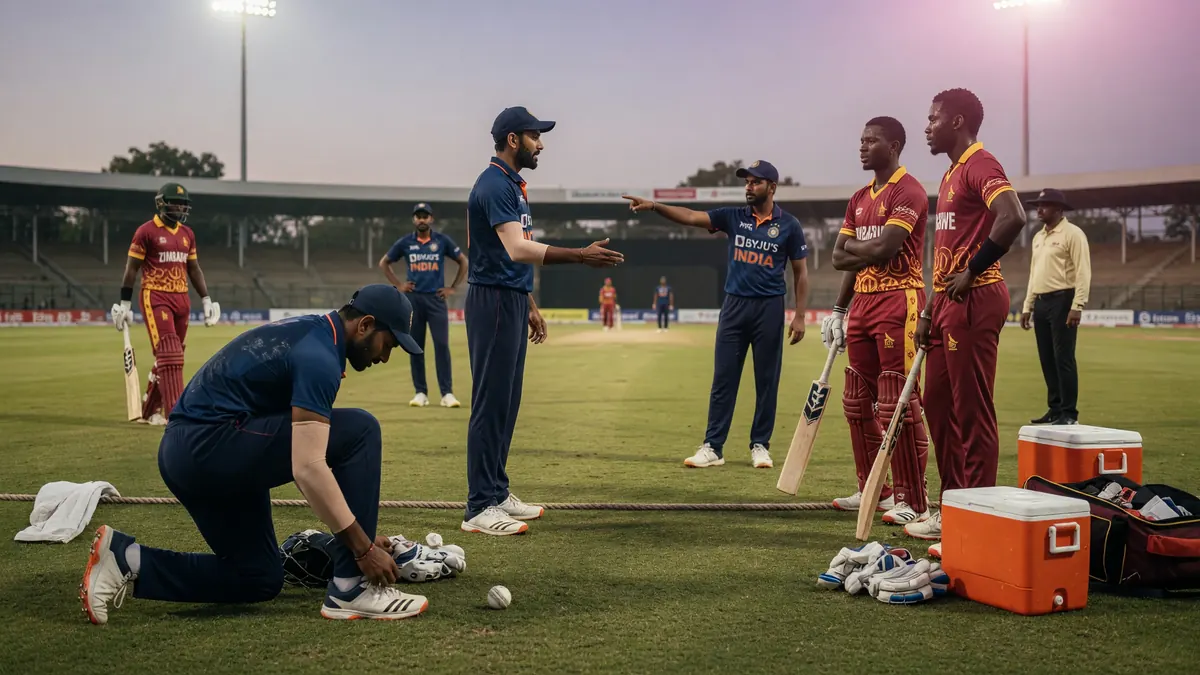
The original match-day briefing listed two clear routes for Indian audiences. Live telecast was carried on the Unite8 Sports network. Live streaming was listed on the FanCode app and website. Those two platforms covered the linear-TV and mobile/OTT paths that most Indian cricket viewers actually use for mid-afternoon bilateral fixtures. Anyone planning around the 4:30 p.m. IST start needed the Unite8 Sports channel line-up for television and a FanCode login for phones and laptops.
Broadcast detail matters on a Saturday afternoon because the kickoff sits across family viewing hours and early fantasy lock windows. Fans who follow ball-by-ball updates alongside a fantasy side usually open the streaming app first, keep the telecast as a second screen if available, and watch for the toss graphic at 4:00 p.m. IST before finalising captain choices. For a fuller set of match-day reading habits and live-score workflows, the desk keeps ongoing coverage under GetMega Live Matches.
Reading the Saturday XI against Thursday's result shows a side that trusted its core. Vaibhav Sooryavanshi kept his place after the record half-century. Mayank Yadav stayed in after the 2 for 18 return. Shreyas Iyer remained captain after finishing unbeaten on 28. The only personnel move — Yash Thakur in, Ashok Sharma out — was a bowling adjustment rather than a batting rethink. That is the pattern of a dressing room protecting a 1-0 lead: change the one role that needs a different look, leave the rest alone.
For Zimbabwe, naming an XI that still featured Raza, Burl, Ngarava and Muzarabani signalled continuity as well. Host sides trailing a series rarely tear up the sheet after one loss; they adjust fields and lengths. Electing to field after the toss was the tactical statement. The personnel list stayed familiar so the home attack could attack India's top order with plans already rehearsed from the first game.
GetMega users who built sides around this fixture had a clean set of confirmed facts before the first ball. India batting first after losing the toss put a premium on top-order scorers and death bowlers who could defend a total later. Sooryavanshi's form from the opener made him a high-owned differential rather than a pure punt. Mayank Yadav's comeback figures kept him in pace conversations. Iyer's captaincy plus unbeaten 28 gave him dual appeal as batter and leadership proxy in some formats.
On the Zimbabwe side, Raza's all-round role and the left-arm pace pair of Ngarava and Muzarabani were the usual value spine when India bat first in Harare. The confirmed XI removed guesswork about Marumani's keeping role and Burl's middle-order slot. Because the series score was already 1-0, incentive structures also mattered: Zimbabwe had more to gain from a win, India had more to lose from a collapse. That imbalance often shows up in bowling intensity through the powerplay more than in batting caution.
The second T20I at Harare Sports Club on 25 July 2026 is now a fixed line in the tour ledger: a Saturday 4:30 p.m. IST start, a 4:00 p.m. IST toss won by Zimbabwe, a decision to field, one India change with Yash Thakur replacing Ashok Sharma, and two fully named XIs. Unite8 Sports and FanCode carried the pictures for Indian viewers. The opener's storylines — Sooryavanshi's record half-century, Mayank Yadav's 2 for 18, Iyer's first win as captain — travelled into the second fixture and explained why the side lists looked the way they did.
For readers revisiting the series later, the value of the day is documentary rather than dramatic invention. The verified brief stops at setup, squads and broadcast routes. It does not claim a chase total, a bowling spell or a series clinch that the source did not carry. That restraint is deliberate. Match-day archives are most useful when they keep the clock, the ground, the XIs and the viewing routes exact, then step aside.
Quick facts from the India vs Zimbabwe second T20I match-day brief on 25 July 2026.
Kickoff times, confirmed XIs, and viewing routes for the fixtures Indian fantasy readers actually track.
